Monday, March 27, 2017


pastedGraphic.png

Title Ten Timid Ghosts
Author and Illustrator  Jennifer O’Connel
Recommended Grade Level  K-2nd
Common Standard Core Addressed

CCSS.MATH.CONTENT.1.0A.B.4
Understand subtraction as an unknown addend problem, eg., subtract 10-8 by finding the number that makes 10 added to 8.

CCSS.MATH.CONTENT.K.0A.A.1
Represent addition and subtraction with objects, fingers, mental images, drawings, sounds (eg, claps), acting out situations, verbal explanations, expressions or equations.

CCSS.MATH.CONTENT.K.0A.A.2
Solve addition and subtraction problems and subtract within 10, e.g., by using objects or drawings to represent the problem.

CCSS.MATH.CONTENT.K.0A.A.4
For any number from 1 to 9, find the member that makes 10 when added to the given number, e.g., by using numbers or drawings, and record the answer with a drawing or equation.

CCSS.MATH.CONTENT.K.0A.A.5
Fluently add and subtract within 5.

Summary

This book is about a witch that moves into a haunted house where live ten ghosts.  The witch wants to take them out, thus she decides to scare them all, one by one.  Throughout the book the witch uses different tricks to scare them away.  Every time a ghost is expelled, the storyteller tells you how many ghosts are remaining in the house.  At the end of the book, the ten ghosts go back to the house and scare the witch away.

Rating ****

It is a great book to teach addition and subtraction within 10.  It is nicely written in rhymed verses that make it appealing to the students.  There won’t be any problem engaging the students with this charming story.  Although it is good for all occasions, it is perfect for Hollowing.  It opens the door for teaching the beginnings of addition and subtraction in Math.

Classroom Ideas

As mentioned it is wonderful for teaching addition and subtraction within 10.  It gives the facility to go even further and connect the material with other topics, such as sets and its comparisons.  It is very open to expansion in other kind of representations, e.g., visual, kinesthetic, spatial, music, etc.  Names and symbols of numbers within 10 can be added to expand the connections during the lessons.  


Since it is written in rhymed verses, it is also possible to add any known (or unknown) melody into part of the verses to be sang by the students.

Saturday, March 25, 2017

INCH by INCH
Posted by Maria Nieto
Image result for inch by inch

Book Title:  Inch by Inch
Author & Illustrator:   Leo Lionni
Recommended Grade Level: Grades K - 2nd grade

CCSS.MATH.CONTENT.1.MD.2
Express the length of an object as a whole number of length units, by laying multiple copies of a shorter object (the length unit) end to end; understand that the length measurement of an object is the number of same-size length units that span it with no gaps or overlaps. Limit to contexts where the object being measured is spanned by a whole number of length units with no gaps or overlaps.
CCSS.MATH.CONTENT.1.MD.1
Order three objects by length; compare the lengths of two objects indirectly by using a third object.
Common Core Standards for Mathematical Practice
CCSS.MATH.PRACTICE. MP.2
Reason quantitatively and abstractly. Students describe and compare lengths using longer than and shorter than and numerically represent relationships among and between lengths. This takes place in the context of comparing sets within data collection as well as comparing objects with different length units. For example, students compare the number of peers who enjoy one hobby with the number of peers who enjoy a different hobby. Students also compare the length of one object, in centimeter cubes, with the length of a second object.

Rating:  ***** This is an excellent book as an introduction to measuring in inches. This book can be use from kindergarten to 2nd grade making appropriate modifications.

Summary
            Inch by Inch is about an inchworm green as an emerald that has the ability to measure things.  A robin is going to eat him, but the inchworm tells the robin, “Don’t eat me! I’m useful.”  After he measures the robin’s tale, the inchworm is busy measuring the different parts of birds like flamingo’s neck or a toucan’s beak, etc. One morning the nightingale demands that the inchworm measure her song, or “I’ll eat you for breakfast.”  The inchworm is faced with a dilemma.  How to measure a song? The nightingale sang and the inchworm measured away until it was out of sight.
Classroom ideas
            We can ask the students how big an inch is.  Read the story “Inch by Inch.” by Leo Lionni. Be sure to use a ruler to show how big an inch is and show it on the smart board too.  The students can come up with ideas of things that could be measured in inches.  Give the students an inch ruler to measure items and connect with physical units and have them record it on a paper. After they record it on paper, the students will be put in groups of two so they can discuss their answers. The students will then have a class discussion on what is too big to measure in inches.


Tuesday, March 21, 2017


The Grapes Of Math: Mind-Stretching Math Riddles

Posted by: Solange Nepomuceno
Author & Illustrator: Greg Tang/ Harry Briggs


Recommended Grade Level: 1st – 5th grade

Common Core Content Standards Addressed

CCSS.Math.Content.1.OA.A2
Solve word problems that call for addition of three whole numbers whose sum is less than or equal to 20, e.g., by using objects, drawings, and equations with a symbol for the unknown number to represent the problem.

CCSS.Math.Content.1.0A.A.2
Solve word problems that call for addition of three whole numbers whose sum is less than or equal to 20, e.g., by using objects, drawings, and equations with a symbol for the unknown number to represent the problem.


Common Core Standards for Mathematical Practice

CCSS.Math.Practice.MP4 Model with mathematics.

Mathematically proficient students can apply the mathematics they know to solve problems arising in everyday life, society, and the workplace. In early grades, this might be as simple as writing an addition equation to describe a situation.

Summary
The Grapes Of Math launches children into the art of problem solving through a series of engaging math concepts.  This book challenges children to think creatively, while they are solving a math problem.  It gives children ideas on how to add more quickly and precisely.  Children feel confortable because it is fun and exciting.  It is an essay way to do math, breaking big numbers into smaller numbers.  It allows children to forget they are learning math without the notion of memorizing formulas.
Rating
The rating is 4.04 star book.  The Grapes Of Math can be used from 1st to 5th grades and diverse classroom setting.  This book is good for all seasons and helps develop higher math skills children need. Also, The Grapes Of Math inspire and challenges kids to use their imagination and common sense to solve problem instead of using the process that involve retelling or repeating information until it is memorized.

Classroom Ideas
1             Fish School a section in The Grapes Of Math book can be used as a great tool to introduce children to the concepts of addition.  Addition is the total or sum of two or more numbers. There are several ways to familiarize children with math concept.  One way that I will use is The Language Teacher Approach TPR, which is a good tool use for visual representation (Wright p.61). This helps students to interact while acquiring knowledge and help them understanding of addition concept. I will ask three students to come to the front and stand next to me on my right and the other two students will be asked to stand next to me on my left.  Then I will ask the class to count how many students I have on my left and how many students I have on my right.  Then I will introduce to the class the number of students as a whole number.  The students will have the opportunity to visualize and understand the concept of addition.

2            The book has specific questions that I will use to engage students in a group activity to practice addition.  I will divide students into three groups and I will provide students a small box with fish made out of construction paper.  Each box contains a number of fish in different color. Group-1 is in charge of colors blue and yellow, group-2 colors orange and green and group-3 pink and red.  Then, I will ask each group how many fish they have in total.  Students will orally provide the answer.  While students are saying the total, I will write each answer on the board.  After, that it will be easy to find the total of fishes in the boxes.


10 Hungry Pigs By Derek Anderson Book Blog


                                               Ten Hungry Pigs

                                         Posted By: Briana Davis

                                               Derek Anderson

                                 Image result for ten hungry pigs

Recommended Grade Level: Pre-K -1st grade

CCSSM Standards: [1-2 content standards, 1-2 SMPs)
When counting objects, say the number names in the standard order, pairing each object with one and only one number name and each number name with one and only one object.
Understand that each successive number name refers to a quantity that is one larger.

CCSS.Math.Practice.MP4
Model with mathematics.

CCSS.Math.Practice.MP5
Use appropriate tools strategically.


Summary: Ten Hungry pigs is a story about 10 pigs and a gigantic story that they create together. Each pig brings something to add to the sandwich that they want. The story also has a twist in the end when the 11 pig comes along.  

Rating: I would rate this book a 5-star because I feel like it would be a very fun and engaging way to help students learn how to count. The book has very bright and beautiful illustration to keep the student's attention page after page. I find the book to be something that all children can relate to because it has many different types of foods that children can relate to. They may have even seen some of the foods at the supermarket.

Classroom Ideas:
The book can be used to help students learn about the number concepts. How to count from 1-10.

As a class, the students can break into groups of two and each person can pick five foods that they can add to their group sandwich. Then draw a picture of their sandwich. The book would also be good for learning about different foods that people like. As a class, we can have each group discuss what is their favorite food to add to a sandwich.

Wednesday, March 15, 2017

Spring 2017 Lehman College EDC715 Book Club Blog


FEAST FOR 10
POSTED BY: ABISOLA OLADIMEJI


Book Title: Feast for 10
Author and Illustrator: Cathryn Falwell
Recommended Grade Level: K-1
Common Core Standards Addressed:
CCSS.MATH.CONTENT.K.CC.B.4.B:  Understand that the last number name said tells the number of objects counted. The number of objects is the same regardless of their arrangement or the order in which they were counted.
CCSS.MATH.CONTENT.K.CC.B.4.C: Understand that each successive number name refers to a quantity that is one larger.
CCSS.MATH.CONTENT.K.OA.A.1:  Represent addition and subtraction with objects, fingers, mental images, drawings1, sounds (e.g., claps), and acting out situations, verbal explanations, expressions, or equations.
CCSS.MATH.CONTENT.K.OA.A.2:  Solve addition and subtraction word problems, and add and subtract within 10, e.g., by using objects or drawings to represent the problem.


CCSS.MATH.CONTENT.K.MD.B.3:  Classify objects into given categories; count the numbers of objects in each category and sort the categories by count.1
CCSS.MATH.CONTENT.1.OA.C.5:  Relate counting to addition and subtraction (e.g., by counting on 2 to add 2).
CCSS.MATH.CONTENT.1.NBT.B.3:  Compare two two-digit numbers based on meanings of the tens and ones digits, recording the results of comparisons with the symbols >, =, and <.

Summary: A counting book that features an African-American family shopping for food, preparing dinner, and sitting down to eat. Lively read-aloud text paired with bright collage illustrations. This book is about a family who went food shopping to prepare a meal together. At the beginning of the book the numbers one to ten are used to represent the ingredients the families were buying. The count begins with one grocery cart and ends with ten hands helping to load the cart. After counting one through ten the book starts counting again the numbers one to ten but this time working together preparing the meal.

Rating:


I give this book a five stars rate, the book is excellent! It’s colorful with great illustrations that capture the reader attention. The book is multicultural, promotes family unity, rhyme and can be used to teach a variety of math topics. The characters and illustrations are interesting and compelling. The text allows for in-depth and adaptable conversations that can relate directly to each child's personal human experience. The language seems to invite students to discuss how their experience with food and family might be similar or different to the experiences in the story. In my reading with children, they were very excited to share how their own food and family experiences take shape. 


Classroom Ideas: This book covers many mathematical concepts such as counting, number grouping, positive and negative integers, addition, subtraction, pattern and sequences, even and odd numbers and more.
·        As a teacher of mathematics, I could easily integrate this book into a variety of lesson plans, more specifically lesson plans revolving around number order and counting.
·        I could do this book as a read aloud whole group, and then break my students off into centers where they must create their own unique math counting book.
·        This book is perfect to and can be adapted as a dramatic play in class using plastic/silicon food.
·         I can use the book to make a grocery list with the help of the students to have a feast in class.
·        To teach counting 1-10 and also rhyming words/ end sounds
·         Print and laminated the objects/foods mentioned in the book. Have students add the items in the shopping cart while am reading to practice their numerical skills.
·        Have students to create they own follow-up book telling their own story about going shopping or helping cooking at home using the numbers 1 to 10.
·        Students can use manipulative such as connecting cubes, bear counters, chips to retell the story in groups or with a partner.


Tuesday, March 14, 2017

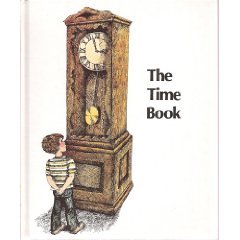
Book Title: The Time Book
Name / Posted By: Fedia Davis

Author / Illustrator: Britannica Discovery Library


Recommended Grade Level: 1st – 3rd  
Common Core Content Standards Addressed
CCSS.Math.Standards: CC-1.MD.B.3
Tell and write time in hours and half – hours using analog and digital clocks.
Common Core Standards for Mathematical Practice
CCSS.Math.Practice.MP5
Use appropriate tools strategically.
CCSS.Math.Practice.MP6
Attend to precision.
Summary: This book speaks about time. It states time in three different aspects: then (what happened); now (what is taking place at present), and after (what will happened). Also, the book shows various illustrations with focus on a little boy trying to understand the concept of time. In addition, the book differentiated activities using degrees of time such as yesterday, today, and tomorrow. The time book specifically points out the three essential points in reading time; seconds, minutes, and hour.
In addition, the book speaks about the days of the week by asking various questions and the month of the year by showing the different activities that can be done based on the season/climate (which is time). Lastly, it asks the main question “What is time?”
Rating:
Five star rating - shiny golden stars Stock Photo - 56253357

This is certainly a five star book. It can be used in multiple grades and various classroom settings. Also, it is ideal for pre-readers and early readers, contains activities to build language, critical thinking, and comprehension.
Classroom Ideas:
1.      This book can be used to teach the concept of time. The visual representations
demonstrate the difference between then, now, and after. The concepts “then, now, and after” are real life experience whereby individuals can relate to things happening at different intervals. For example, “then” explains an event that happened, “now” explains an event being taken place at present, and “after” explains what will take place in the future (which could be five (5) minutes from now).
2.      You can have students tell a story about their daily routine; what happened from the time
they got out of bed up to the point of them (students) returning home. Allow students to use actual time to explain each event from then until now and even have them predict what will take place later.
3.      Have students tell how many seconds are in a minute and how many minutes are in an
hour. Have students write in the numbers on an unfinished clock provided for them. This will
help the teacher to see if students are able to follow sequence.          

Sunday, March 12, 2017

Book Title: Bananas

Posted by: Karla Sacaza
Author:  Jaccqueline Farmer & Illustrator: Page Eastbun O’ Rourke

Image


Recommended Grade Level:  3 4 5 / Multiplication, Percents


CCSSM Standards:  CCSS.MATH.CONTENT.3.NFA1 Understand a fraction 1/b as the quantity formed by 1 part when a whole is partitioned into b equal parts; understand a fraction a/b as the quantity formed by a parts of size 1/b.
CCSS.MATH.CONTENT.3.0A.A.3 Use multiplication and division within 100 to solve word problems in situations involving equal groups, arrays, and measurement quantities, e.g., by using drawings and equations with a symbol for the unknown number to represent the problem


Summery: The book Bananas provides the reader with lots of factual information about the banana fruit.  The book discusses the origin of bananas, the many varieties of bananas that exist, the many uses and benefits people get from it, and it also provides the reader with delicious recipes that can be made with the banana fruit. The book also provides readers with jokes about bananas.  My favorite one was:
Q: Did you hear the joke about the banana peel?
A: Sorry, it must have slipped my mind.
This Book provides context that help student build meaning for concept.  The students’ familiarity with bananas facilitates understanding of mathematics, as they are able to organize their thoughts around ideas that they are familiar with.  The book compares the shape of bananas to fingers.  It states that each group of ten to twenty bananas is called a hand.  This provides students the idea to engage with the problem.  The recipes in the book involve measuring concepts that can be used t o teach fractions, multiplication, and percent by providing the student with real world experience.   Students will enjoy learning math while making a delicious banana split. 


Rating:  The rating of this book is 4 to five star

Classroom Ideas:

**Make Chocolate-dipped Bananas with the recipe provided in the book. The recipe involves fractions such as ½ and ¼ .  The ingredients should be recorded in a chart that children can see while making he recipe.  Pictures of the measuring cup with the actual measuring being used should be included in the chart. 
This allows children to visualize the numbers and the amount measured while learning fraction vocabulary.  Students will develop a concept of what fraction is while having fun.

**You can have the children draw their hands on a piece of construction yellow paper.  You can then have them represent both of their hands as one banana hand.  Remind the students that as told in the book “bananas look like fingers and each group is called hand and each banana hand has ten fingers.  You can have groups of three to four students come up with the answer to a word problem provided to them using their finger pictures. 
A word problem can be the following.

How many bananas are in 3 hands of bananas if there are 10 bananas on each hand?

The children will used this opportunity to engage in multiplication concepts.  The teacher can provide students with suggestions on how to solve the problem.